
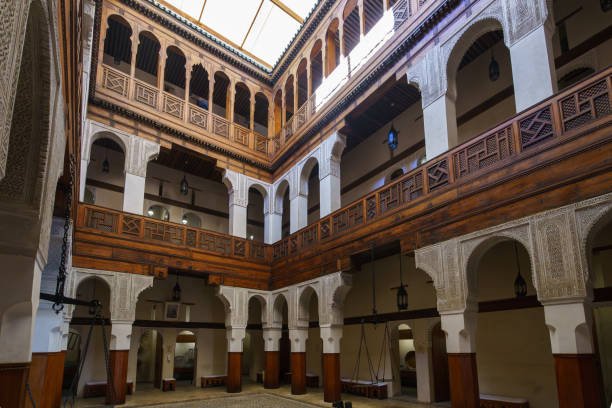
The Cairo Citadel, also known as the Citadel of Saladin, is a medieval Islamic-era fortification in Cairo, Egypt, built by Salah ad-Din (Saladin) and further developed by subsequent Egyptian rulers. It was the seat of government in Egypt and the residence of its rulers for nearly 700 years from the 13th century until the construction of Abdeen Palace in the 19th century. Its location on a promontory of the Mokattam hills near the center of Cairo commands a strategic position overlooking the city and dominating its skyline.
History
The Citadel was built by Salah ad-Din in the 12th century to protect Cairo from the Crusaders. It was originally a simple fortress, but it was expanded and fortified over the centuries by subsequent rulers. The Citadel was the site of many important events in Egyptian history, including the Battle of Cairo in 1260, when the Mamluks defeated the Mongols.
Architecture
The Citadel is a complex of buildings, including mosques, palaces, and museums. The most famous building in the Citadel is the Mosque of Muhammad Ali, which was built in the 19th century. The mosque is a masterpiece of Ottoman architecture and is one of the most iconic landmarks in Cairo.
Museums
The Citadel houses several museums, including the Military Museum, the Carriage Museum, and the Garden Museum. The Military Museum exhibits a collection of weapons, armor, and other military artifacts from the Mamluk and Ottoman periods. The Carriage Museum exhibits a collection of carriages and other vehicles that were used by the Egyptian royal family. The Garden Museum exhibits a collection of plants and flowers from around the world.
Tourism
The Cairo Citadel is one of the most popular tourist attractions in Cairo. It is a UNESCO World Heritage Site and is a must-see for any visitor to the city.


